Water Extraction in Tucson, AZ
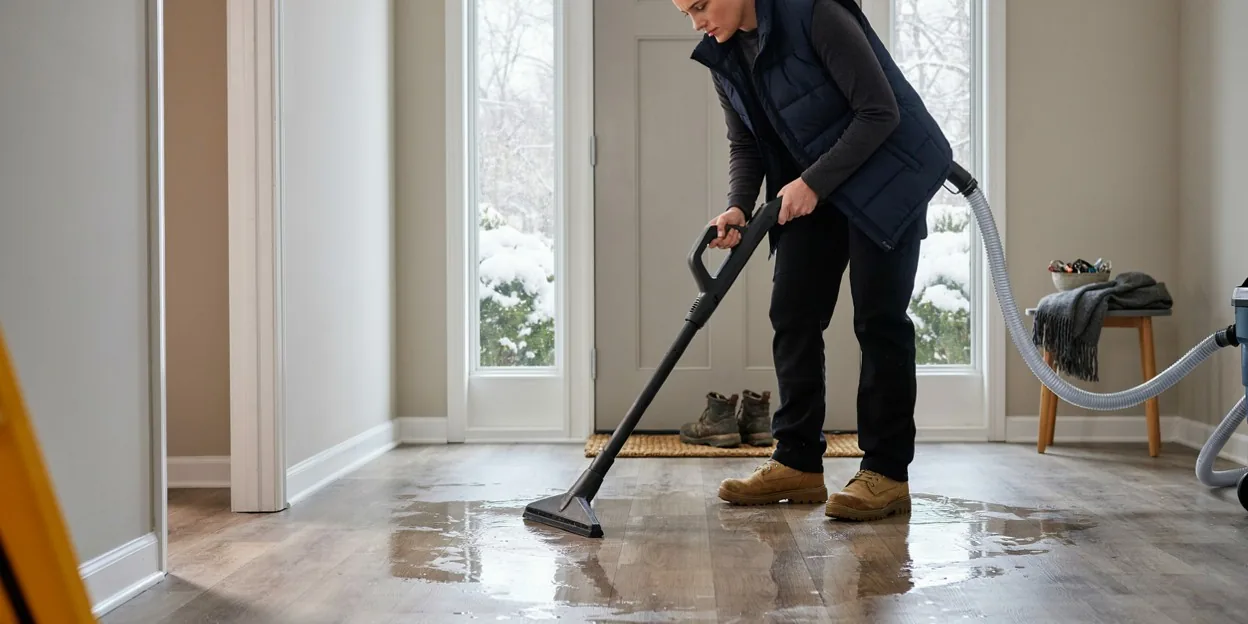
You came in from the carport and the kitchen tile has a sheen to it. By the time you find the source, a supply line under the sink, the water has crossed the grout lines into the dining room and the hall carpet squishes at the edge. On a slab, water does not go down. It goes out. This site routes your call to an independent local provider who does water extraction across Tucson and Pima County.
Getting the water off the slab before the block drinks it
The provider's first job is volume. A truck-mounted or portable extractor pulls standing water off tile, saltillo, laminate, and carpet, and a weighted wand squeezes the pad under the carpet where most of the water hides. Then the meter comes out. Every room gets read at floor level, including rooms that look dry, because water on a slab runs along the plumbing chase and under the door thresholds into the next room.
Tucson's block walls are the reason speed matters. Slump block and burnt adobe are porous, and the bottom course of a wall sitting in a quarter inch of water pulls it up like a wick. Once the block is wet, drying takes days instead of hours. Extraction is the fast part; the structural drying that follows is the long part.
What to do while the extractor is still on the truck
Close the valve at the meter box or the riser by the front wall if water is still running. Kill the breaker for any room where water reached an outlet. Prop open the cabinet doors under the wet sink and pull the toe kick if it pops off. Get rugs, boxes, and anything with a cardboard base off the floor. Take photos of every room from the doorway before anything moves. Do not run the swamp cooler; it adds moisture to the air you are trying to dry.
What stays down and what comes up
Most tile stays. Grout and thinset hold water, but the tile itself dries in place under air movement, and saltillo, being unglazed, dries slower but usually survives. Laminate that has cupped comes up because it does not flatten again. Carpet is often saved if the water was clean and the pad is replaced. Baseboards near the wet edge are pulled so the drywall behind them can be read and dried. Ask the crew to mark the wet boundary on the wall with tape so you can see the scope before it becomes a bill.
Slabs, saltillo, and the Tucson water table
Almost every house in Tucson built after 1950 sits on a concrete slab poured over caliche and river gravel, with no basement and rarely a crawl space. Midtown ranches near Sam Hughes and Blenman-Elm often have saltillo or terrazzo over the slab; east-side and foothills homes from the 1990s onward run tile and laminate over the same concrete. In both, water spreads under the flooring faster than it soaks through it.
The monsoon adds a twist. From July through September the dew point sits in the 60s, and a room that would air-dry in an April afternoon stays damp for a week in August. When the water came in from outside during a storm, it becomes a monsoon flood cleanup job, because wash water is not clean water. A leak that turns out to be under the slab becomes leak detection once the standing water is gone.
Arizona policies tend to treat a sudden supply line failure as a covered loss. What the adjuster wants is a record: photos of the standing water, the meter readings by room, and a dated log of what was removed. The provider builds that from the first hour.
Call while the tile is still shining
Have the address ready and be able to say which rooms have water and whether it is still coming. Mention if the water reached carpet, cabinets, or an outlet. Call (520) 422-6139 and tell us what you walked into.